Skip to content
 Accessories for flow control, safety, and instrumentation are essential to system performance, not just additions, but core to safe, efficient operations. Oak Process Systems has full accessory integration for oil and gas facilities, including installation, calibration, and testing. These components support process control, protect assets, and ensure accurate monitoring from wellhead to custody transfer.
From control valves regulating flow to gauges delivering real-time feedback, each accessory plays a defined role in maintaining uptime and compliance. With the right accessories, systems run smoother, react faster, and deliver the reliability demanded in harsh operating environments.
Maintaining precise flow control and isolation is essential for safe and efficient system operations. Valves in this category support throttling, redirection, and complete shutoff under a range of pressures and media conditions.
These units throttle flow based on system conditions such as pressure, temperature, or level input. Configurations include globe, V-ball, and segmented ball designs, often paired with pneumatic or electric actuators. In energy systems, they manage everything from separator discharge to pump bypass flows and combustion control. Their modulating function keeps process variables within operating bands while minimizing overshoot and oscillation.
Installed in high-pressure applications, choke valves handle controlled pressure reduction and flow restriction. They appear frequently in wellhead production, separator service, and early-stage process headers. OPS provides both adjustable and fixed-orifice types, built to resist cavitation, erosion, and vibration under aggressive operating conditions.
These precision valves provide accurate flow metering for small-diameter piping. Operators use them for applications such as chemical injection, sample draws, and analyzer loop isolation. The fine-thread stem and tapered seat allow technicians to dial in flow rates with minimal leakage, even under varying pressure conditions.
Designed for quick, quarter-turn operation, ball valves serve as shutoff or switching devices in both manual and automated service. They offer low pressure drop, straightforward maintenance, and compatibility with a wide range of fluids. OPS supplies full-port and reduced-port configurations with lockout-ready handles and actuator mounts for remote operation.
Pressure regulators provide automatic downstream pressure control without requiring power or signal input. Used on fuel gas, instrument air, and utility lines, they respond directly to changes in flow demand or line pressure. OPS sizes regulators to maintain performance across temperature swings, contaminant exposure, and cyclic service.
Flow accessories often work in tandem with pneumatic, electric, or hydraulic actuators. Actuated ball or control valves respond to SCADA input or field devices, enabling real-time adjustments based on process conditions. Integration with positioners, limit switches, and solenoids supports both remote operation and local feedback.
Precise actuation enhances safety and efficiency, minimizing the delay between system demand and mechanical response. Proper mounting, stroke calibration, and control loop tuning are essential to prevent overshoot or lag in operation. Together, these components deliver stable flow paths and rapid control under changing field conditions, reinforcing the backbone of mechanical performance.
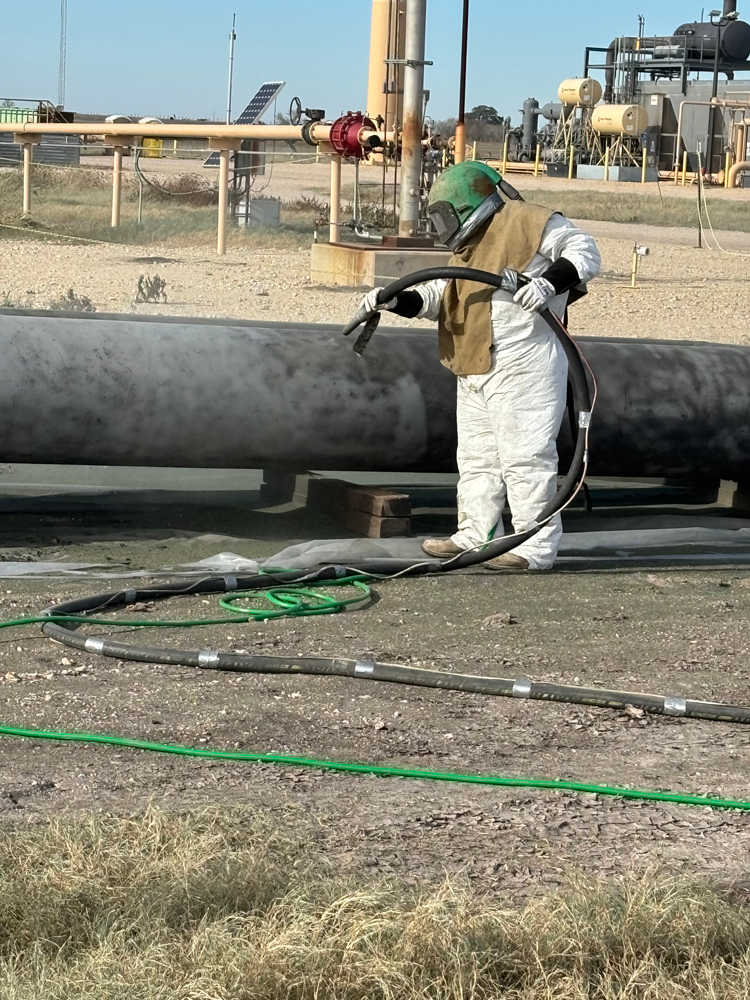
Overpressure scenarios can compromise the integrity of pipelines, vessels, and mechanical equipment in seconds. Protective components like relief devices and backflow preventers activate automatically during abnormal conditions, shielding personnel and assets from damage. These safety accessories respond to set thresholds, blocking or redirecting process media to prevent spikes from exceeding design limits.
These spring-loaded devices vent process fluid once internal pressure exceeds a calibrated setpoint. OPS outfits systems with relief valves tuned to operating parameters, allowing predictable pop-off and re-seal behavior. Units reset automatically once pressure returns to normal, supporting continuous operation without manual intervention.
PSVs provide rapid, fail-safe protection for vessels and high-pressure systems. They open fully at a designated pressure to release volume quickly, ensuring no part of the system sees pressure beyond its rated capacity. Technicians size and place PSVs according to ASME and API codes to guarantee compliance.
Check valves maintain directional flow and prevent sudden surges caused by reverse pressure. These non-return units sit between pumps, compressors, and line transitions where backflow could disrupt operations or contaminate upstream systems. Options include swing, piston, and spring-loaded styles, selected based on velocity, orientation, and media type.
Inline strainers catch particulates, rust flakes, and construction debris before they reach control valves or instrumentation. Crews install them at system intakes or just upstream of sensitive components to limit clogging and abrasion. OPS provides basket, Y-type, and duplex configurations matched to pressure class and flow profile.
When installed in the right configuration, these safety systems create multiple layers of protection. Operators gain peace of mind knowing their infrastructure can absorb process deviations without exposing personnel or equipment to harm.
Accurate fluid level control and timely discharge are essential for efficient separation, storage, and treatment processes. Whether managing interface levels in a separator or draining liquids from a knockout drum, field-proven components must respond reliably to changing volumes. These accessories help operators monitor tank conditions, trigger discharge events, and verify process status in real time.
Dump valves, level controllers, and sight glasses work together to streamline operations. Each serves a different purpose but supports the same goal: safe, efficient liquid handling without overflows or unnecessary downtime.
Each component plays a defined role in managing fluid levels and discharge timing. These tools respond to real-world changes in tank volume, interface movement, and separator loading.
These valves automatically discharge collected fluid once a preset level is reached. Crews pair them with pneumatic or electric actuation, matching the site’s control architecture. Fast open-close response reduces short cycling and prevents buildup in production separators.
Controllers detect fluid height using mechanical floats or electronic sensors. When levels hit a defined threshold, the controller sends a signal to open or close the associated dump valve. Tuning sensitivity and deadband ensures consistent operation even with foam, surging, or emulsion interference.
Installed at the tank wall or vessel interface, sight glasses give operators direct visual confirmation of fluid levels. These components supplement automated controls and are critical during startup, calibration, or troubleshooting. OPS supplies armored, illuminated, and high-pressure models depending on process specs.
These systems prevent overflow events, ensure clean separation cycles, and give technicians the data they need to make field adjustments in real time.
Real-time visibility keeps process systems stable and efficient. Accurate instrumentation ensures that operators can react to changes in pressure, temperature, or flow without delay. These devices anchor every control and safety decision in the field.
Monitoring tools must withstand vibration, thermal cycling, and system transients. Readings need to hold steady whether the system is in startup, full flow, or shutdown, and the right mix of analog and digital units ensures both operator checks and remote data reliability.
Many systems use turbine meters, transmitters, and gauges in tandem, and this layered approach balances direct-read visibility with automated reporting. Field hardware must integrate easily with SCADA, PLCs, or flow computers for full oversight.
Gauges mounted on separators, pump discharges, and tanks provide immediate values. These devices use bourdon tubes or bimetallic coils sized for the expected range and environment, and vibration-dampening and diaphragm seals improve reliability in harsh conditions.
Transmitters translate process changes into electrical signals. Each unit gets scaled to a precise span, such as 0 to 300 PSI or 50 to 250°F. These signals feed directly into controllers, alarms, or trend logs. Diagnostics built into smart transmitters flag sensor drift and cable issues. Hazardous locations use explosion-proof models with approved glands and wiring. Wireless options cover remote sites without control wiring.

Turbine meters track liquid flow by measuring rotor speed inside a fixed housing. This speed directly correlates to volume, and when paired with pulse outputs, meters report flow rate and totals to automated systems. Installers position meters with enough straight-run pipe to prevent turbulence. Calibration against known flow volumes ensures data stays within spec, and cleaning and rotor checks keep readings stable over time.
These meters perform best with clean, low-viscosity fluids, so systems that carry wax, sand, or emulsions may require pre-filtration or an alternate device type. Routine inspections verify internal condition and overall accuracy.
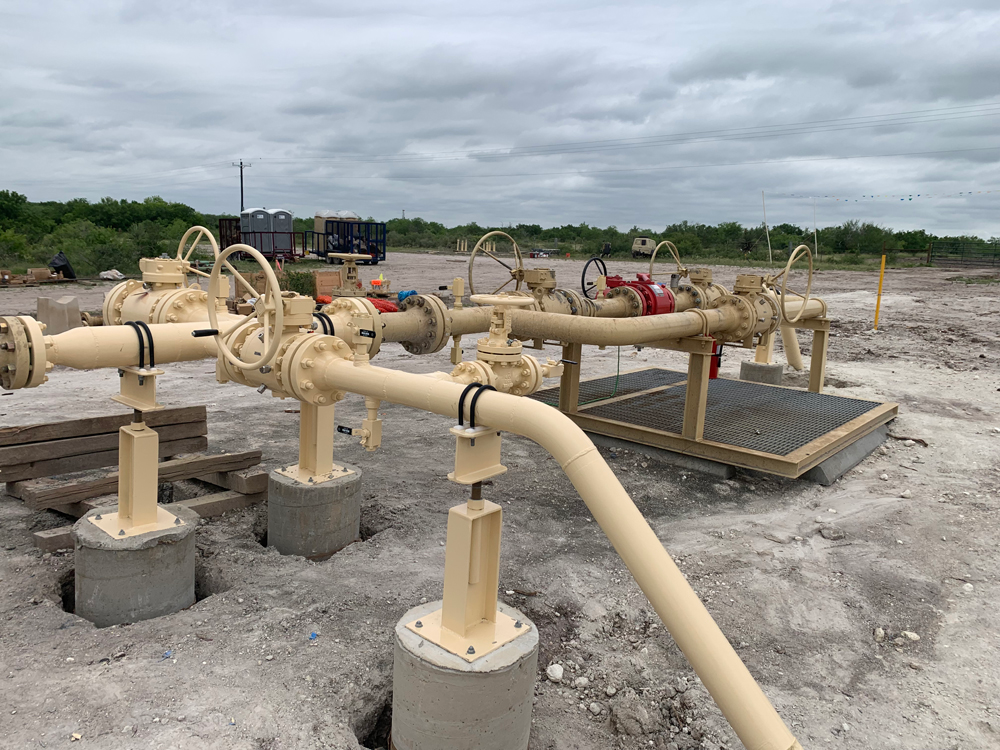
All measurement devices must feed a common data platform. SCADA and PLC systems collect values from gauges, meters, and transmitters, allowing real-time tracking and fast decisions, and signal conversion bridges analog outputs with digital controls.
Protocols like Modbus, HART, or Foundation Fieldbus support seamless integration. Input ranges and scaling match the system’s design specs. This coordination ensures that field data translates to accurate operator displays. When calibration, control, and monitoring align, facilities avoid blind spots and downtime. Accurate field instrumentation supports every aspect of flow control, safety, and audit readiness.
Instrumentation systems rely on stainless steel tubing and compression fittings to deliver consistent performance across pressure and temperature swings. These small-bore components link transmitters, gauges, valves, and analyzers without the bulk or complexity of welded piping.
Tubing routes process media or pneumatic signals between control points because it bends easily to fit confined enclosures or instrument racks while holding tight tolerances. Most systems use 316 stainless steel for its corrosion resistance and long-term stability.
Fittings play a key role in maintaining seal integrity without requiring thread tape or welds. Compression designs use ferrules and nut bodies to create gas-tight, leak-free connections, and they also allow for rapid field changes without specialized tooling.
Mounting supports reduce vibration and prevent fatigue at bends or coupling points. Tubing runs must avoid sharp angles, unsupported spans, or repeated stress at termination points, and proper routing and clamp placement increase the life of both tubing and attached devices.
These components must match system pressure ratings and media compatibility. Typical applications range from low-pressure signal loops to 6,000 PSI chemical injection lines, and all contact surfaces must be clean and free of burrs to prevent leaks or measurement errors. Key configuration options used in most energy-sector installations include:
Precision-cut sections are bent or shaped to follow panel, tray, or enclosure layouts.
These pass through walls or instrument panels while preserving seal integrity on both sides.
Field crews use these to split, join, or redirect flow paths with minimal added volume.
These components terminate lines temporarily or during commissioning without damaging the ferrule set.
Used to tie tubing directly into transmitter manifolds or valve sets with matched threads and seat geometry.
Each connection supports quick isolation, loop modification, or device replacement with minimal downtime. This flexibility allows maintenance teams to make updates without disrupting the rest of the process line.
Proper accessory selection shapes how systems perform under real-world conditions. From regulating flow to protecting against overpressure, each component plays a role in overall reliability. Oak Process Systems ensures that valves, fittings, and control devices integrate cleanly into broader facility scopes, helping clients meet performance targets without excess complexity or risk of failure. Reach out to get a quote.
 Optimized by Seraphinite Accelerator