Skip to content
 Successful energy infrastructure begins with the ground itself. From wellpad clearing to concrete foundation work, every element of the site must have shaping, stabilization, and prepare for long-term performance.
Oak Process Systems delivers field-proven civil services that support upstream and midstream development from day one. Whether supporting new facility construction or modifying an existing site, they build surfaces and subsurfaces that carry structural load, manage environmental exposure, and stay within design tolerance.
Energy facilities depend on stable, accessible, and properly graded sites. Civil construction lays the groundwork, for everything that follows, from pipe installation to structural steel erection. Each element must meet exact tolerances and environmental conditions to support long-term performance.
Oak Process Systems delivers field-tested civil services that align with both owner expectations and engineering specifications. Their teams work across new greenfield developments, brownfield expansions, and site retrofits, scaling services to the project’s phase and scope.
Crews manage soil movement, drainage, material placement, and final grading as part of full-field development. These services integrate seamlessly with mechanical, piping, and structural work to keep schedules on track and reduce rework during later phases.
The civil scope covers all preparatory ground activity needed before mechanical, piping, or structural construction begins. This process includes:
Vegetation, topsoil, and debris get removed to establish a clean, stable footprint. Crews identify subsurface features, flag existing utilities, and establish grade stakes before any cut or fill operations begin. Clearing also includes brush grinding, tree removal, and erosion control setup around disturbed areas.
Crews build swales, lay down geotextiles, and install culverts to direct runoff and prevent sediment migration. OPS also places check dams, slope drains, and perimeter berms to protect work areas during storm events. This ensures compliance with stormwater pollution prevention plans and protects nearby waterways.
Operators adjust terrain to meet drainage plans, structural elevations, and safe equipment access. This may include building temporary construction benches, managing cut-and-fill balance, and verifying final grades with GPS-guided machinery. Proper grading ensures smooth transitions to trenching, foundation placement, and access paths without rework.
The crews condition native soils for density, moisture content, and load-bearing requirements. Crews use padfoot rollers, smooth-drum compactors, or chemical stabilization to meet geotechnical targets. Stabilized zones may include under-pipe bedding, structural pads, or roads requiring multi-layer subbase.
Crews construct temporary and permanent roads using compacted aggregate or engineered matting. Road installation includes turnouts, drainage crossings, and maintenance grading to ensure all-weather access throughout construction and facility operation. The company also provides signage, fencing, and perimeter controls where required.
These core tasks reduce environmental impact, support structural loads, and ensure compliance with permit conditions. Crews complete each phase with careful sequencing, helping set the foundation for everything that follows.
Earthwork shapes the terrain into a stable, build-ready platform that supports oil and gas infrastructure across the full lifecycle. Whether building a new compressor station, laying down tank foundations, or preparing well pad expansions, this process sets the elevation, load profile, and drainage conditions that every phase relies on. OPS delivers accurate earthwork services across greenfield and brownfield environments, applying both heavy equipment and engineered sequencing to move material efficiently and to spec.
Earthwork proceeds in a defined sequence to establish stable grades, control drainage, and support future construction. Each phase requires technical accuracy to meet design tolerances and geotechnical standards:
OPS enforces QA checkpoints throughout grading and compaction activities, verifying slope, density, and elevation as each zone transitions to the next phase. The result is a finished site that holds grade, sheds water, and supports the infrastructure built above it.
Energy development demands consistent access to remote or undeveloped sites, often across difficult terrain. Roads must support transport trucks, oversized loads, and repeated crew traffic, while pads must carry the concentrated weight of rigs, tanks, and staging equipment without shifting or rutting. Without proper construction, both become weak points that stall progress and increase cost.
Grading, drainage, and soil stabilization form the foundation of reliable access. Crews construct roadways and pads to exact elevation and slope requirements, coordinating with mechanical and utility scopes to prevent tie-in delays. These surfaces endure months of vibration, weather exposure, and loading cycles, making their initial build quality a determining factor in overall project performance.
Each road starts with subgrade evaluation and conditioning. When soil lacks cohesion or drainage capacity, chemical stabilizers or geogrid systems increase bearing strength and reduce long-term settlement. Multiple lifts of crushed aggregate follow, each compacted to eliminate air voids and support traffic under wet and dry conditions alike.
Where roads cross low-lying areas or natural drainage paths, culverts and slope protection prevent washouts and maintain year-round access. Dust suppression and edge reinforcement round out the design for safer, longer-lasting service.
Permanent infrastructure begins with accurate layout and properly formed foundations. From pipe racks to vessel skids, the base must support static weight, dynamic load, and vibration without shifting or settling. Every detail matters, form boards must be square, elevations exact, and pour sequencing timed to allow proper placement without cold joints.
Concrete work begins with excavation, subgrade conditioning, and compacted backfill. Crews place rebar cages with proper clearances, tie spacing, and structural overlap. Forms are set to match engineering prints, including embedded items such as anchor bolts, conduit sleeves, or dowels. Pouring occurs in controlled lifts with vibratory consolidation to avoid air pockets and ensure strength through the full depth of the structure.
The company tailored concrete systems to the size, load, and function of each asset. Foundation types include:
OPS begins each site with geotechnical assessments to determine native soil strength, composition, and compaction potential. Teams identify unsuitable materials and determine required fill types, moisture targets, and load ratings to guide all grading activity.
Excavators, dozers, and scrapers move large volumes of material to establish rough grade. Crews separate reusable fill from overburden and manage excess soil with coordinated haul-off or stockpiling. OPS tracks quantity and location to ensure clean transitions to structural or utility areas.
Operators use survey data and site geometry to minimize material import or export. Strategic cuts reduce haul distances, while fills are placed in controlled lifts to avoid settlement. Crews adjust slopes and transitions to maintain safety and water flow across the site.
Crews monitor soil moisture in real time, adding or reducing water content as needed before rolling. They use vibratory or static compactors to reach density requirements, validating each lift with nuclear density testing or alternative QA tools.
Once bulk movement is complete, the team finishes surface shaping with blade control and laser or GPS-guided grading systems. This final stage sets drainage slopes, elevation tolerance, and smoothness for roads, pads, or concrete placement.
After each pour, technicians finish, edge, and cover the surfaces for curing. Technicians verify slump, temperature, air content, and cylinder strength per batch to document performance. Once hardened, forms are stripped, bolt patterns checked, and turnover packets prepared with as-builts, test results, and placement records for closeout.
Field teams analyze elevation data and watershed patterns to determine flow paths and saturation risks.
Inputs from modeling shape plans for slope grades, discharge zones, culverts, and collection basins sized for site-specific volumes.
Crews install culverts, stormwater basins, and stabilized ditches to channel and slow water movement across the project footprint.
Access roads are graded with water-shedding crowns and appropriate slope to keep surfaces dry and traffic-safe.
Swales, riprap, and geotextile blankets are deployed during active grading to prevent soil loss and protect underlying structures.
Short-term BMPs remain in place until long-term systems are established, inspected, and ready to take over flow control.
Drainage infrastructure preserves foundation integrity, limits erosion around critical assets, and ensures compliance with environmental regulations from construction through long-term operation.

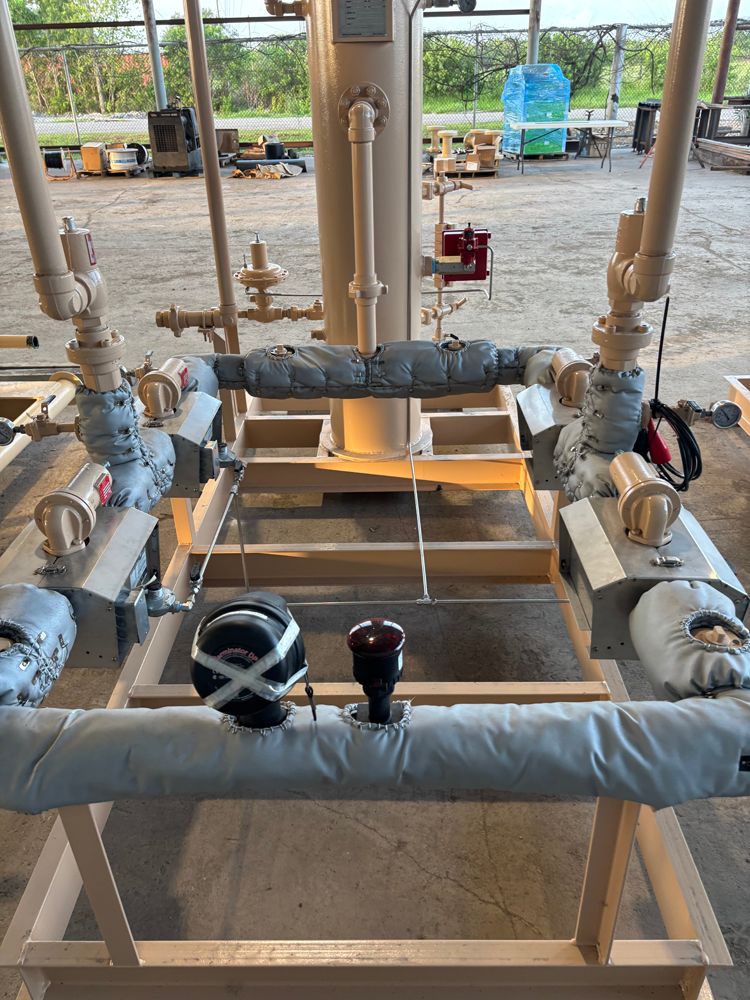
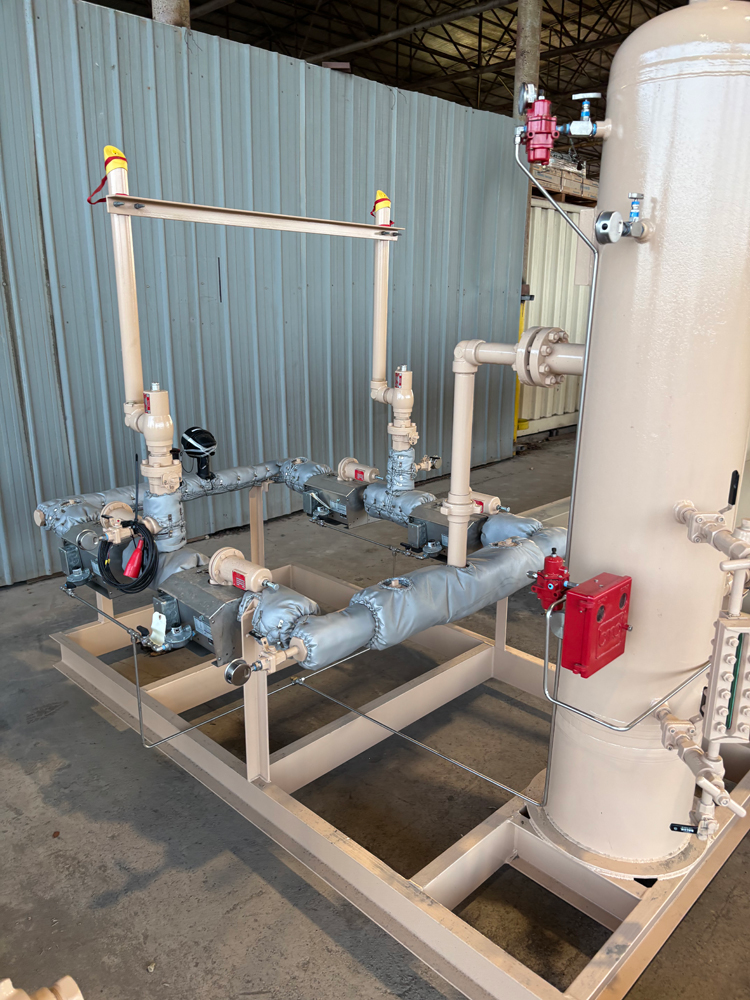
Proper accessory selection shapes how systems perform under real-world conditions. From regulating flow to protecting against overpressure, each component plays a role in overall reliability. Oak Process Systems ensures that valves, fittings, and control devices integrate cleanly into broader facility scopes, helping clients meet performance targets without excess complexity or risk of failure. Reach out to get a quote.
 Optimized by Seraphinite Accelerator